
Describe it once
Tell us what you're seeing, what kind of roof you have if you know, and where the issue shows up inside. We connect you with a local contractor who handles that type of repair.
Serving Sugar Land, Texas & surrounding areas
Calls answered around the clock
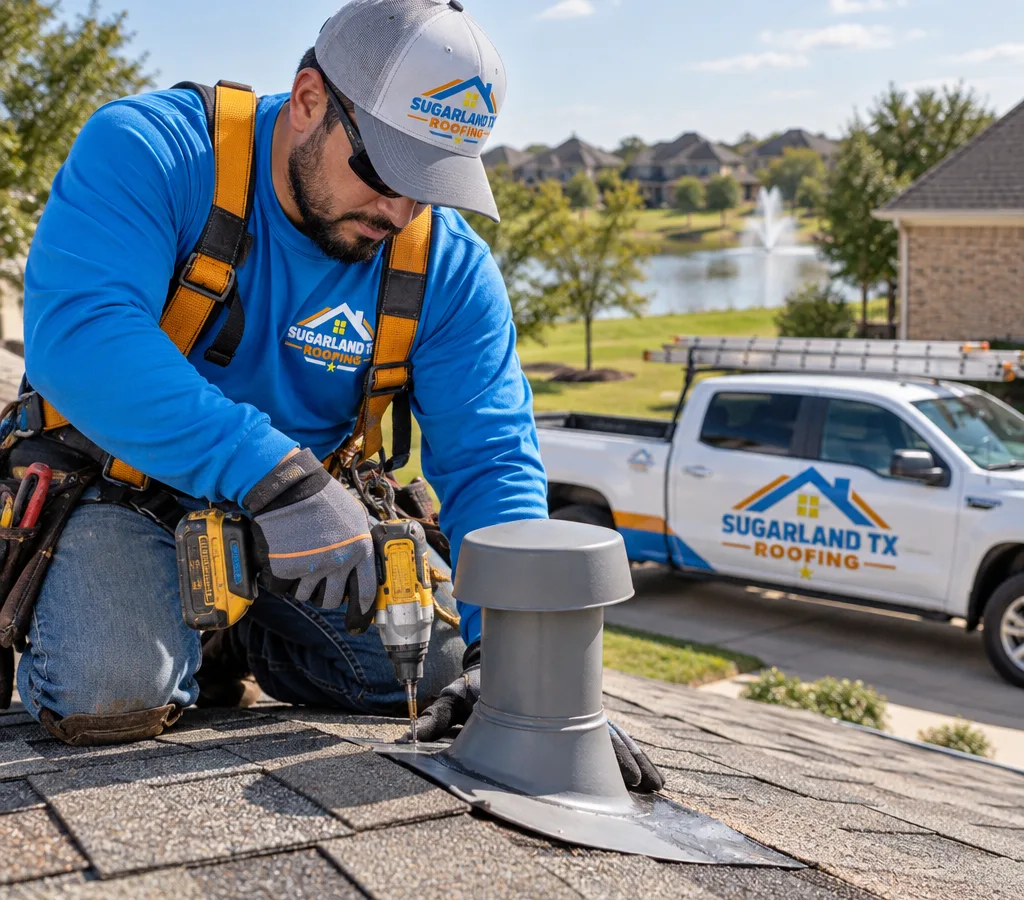
Roof repair · Sugar Land, TX
Describe what you're seeing once and get connected with a local roofing contractor who handles repairs like leaks, shingle damage, and storm wear.
CALL NOW: (346) 375-7532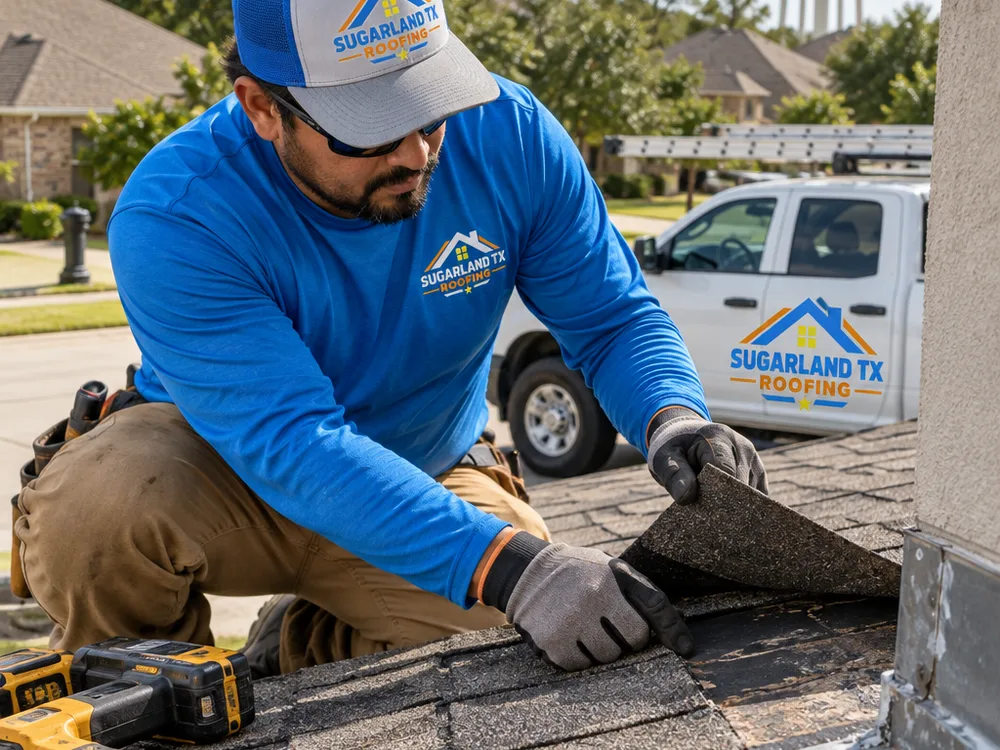
Sugar Land roof repairs usually start with one simple goal: stop water from getting past the roofing system and into the attic, insulation, or ceilings. The contractor you're connected with will look for the actual entry point—which is not always directly above the stain inside—and then recommend a repair that matches the roof type and the failure.
A roof repair appointment commonly includes:
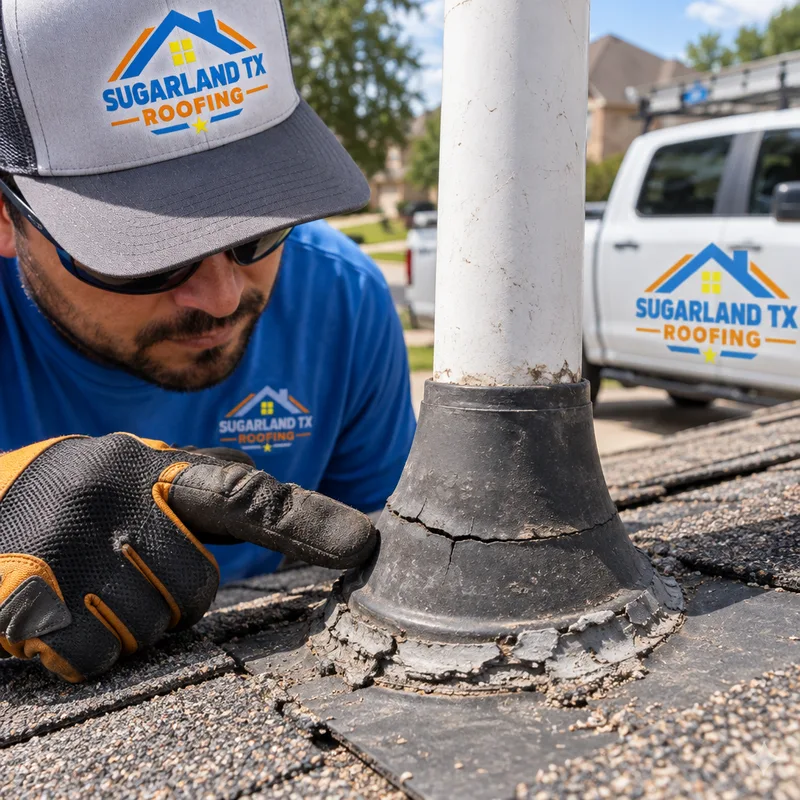
In Sugar Land and the greater Houston-area climate, roof problems often show up after heavy rain and wind, and small weaknesses around penetrations such as plumbing vent boots can become leaks. If you're calling about roof repair in Sugar Land, TX, it helps to mention what you noticed first: a ceiling stain, dripping at a vent, granules in gutters, shingles on the ground, or water near a wall.
If you're still deciding who to talk to, roofing in Sugar Land through Sugar Land Roofing is set up so you can explain the situation once and get routed to a local contractor who works on repairs regularly.
One call, clearer repair steps
Tell us what you're seeing, what kind of roof you have if you know, and where the issue shows up inside. We connect you with a local contractor who handles that type of repair.
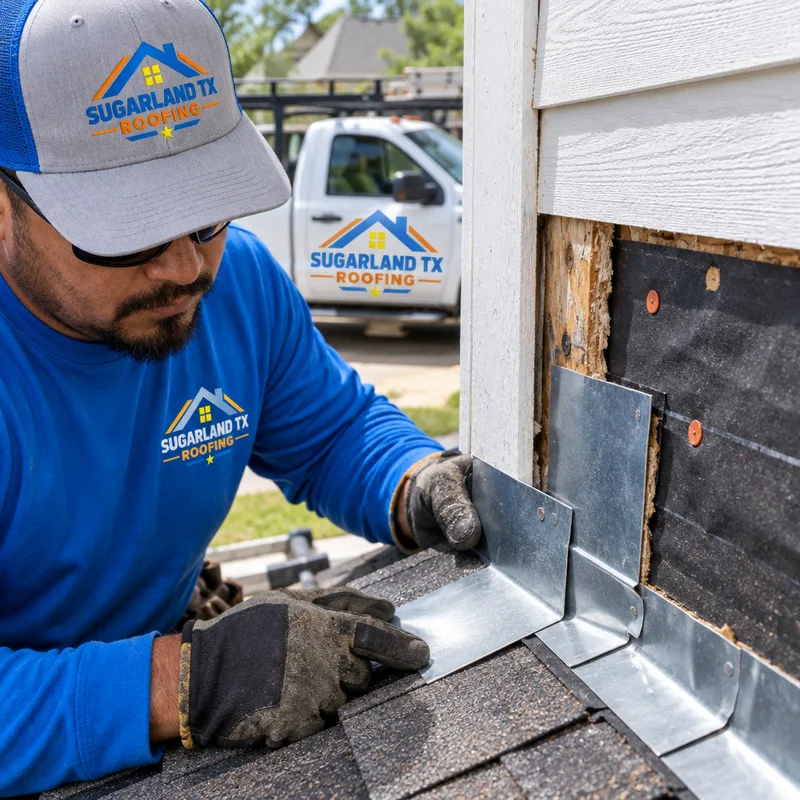
Some problems need a simple shingle replacement; others need flashing work or a small rebuild around a penetration. The contractor can confirm what's actually needed after checking the roof.
You're connected with an independent contractor who serves the Sugar Land area, so the conversation stays focused on the roof systems common to homes here.
You speak to the contractor directly, ask questions, and decide whether to move forward. The contractor explains the repair approach and any options.
A good repair plan includes what will be opened up, what will be replaced, what will be sealed, and what should be checked around the repair area to prevent repeat leaks.
The referral process
Share the basics: where you see water or damage, when it started, and whether you've had recent storms or tree limbs over the roof. If you can, note your roof type and approximate age.
Sugar Land TX Roofing routes your call to an independent roofing contractor who handles the kind of repair you described in Sugar Land, Texas.
They'll typically inspect the suspected leak area, flashing points, and any related sections. You'll hear what they found and what the repair would involve.
If the plan makes sense to you, you can schedule the work directly with the contractor. If you're not ready, you can pause and think it over.
If water is showing up inside or shingles are missing, call and describe the problem once. We'll connect you with a Sugar Land roof repair contractor who can inspect and explain the repair options.
CALL NOW: (346) 375-7532Repair and material details

Common questions
A repair makes sense when the problem is confined to a specific area like a few missing shingles, a failed pipe boot, or a flashing issue at a wall or chimney. If multiple areas are failing or the roof surface is generally worn, the contractor may talk through broader options after seeing the roof. When you call about roof repair Sugar Land Texas homeowners often describe interior staining; the contractor will trace that back to a specific roof detail before recommending a scope.
The most useful details are where the leak shows up inside, when you first noticed it, whether it happens only during heavy rain, and whether any shingles or debris came down. If you know the roof age, the contractor can better judge whether matching materials and a targeted repair are realistic.
No, water can travel along decking, rafters, insulation, or ductwork before it shows up on drywall. A roofer typically checks uphill from the stain area, paying close attention to penetrations, valleys, and wall transitions, because those are common entry points.
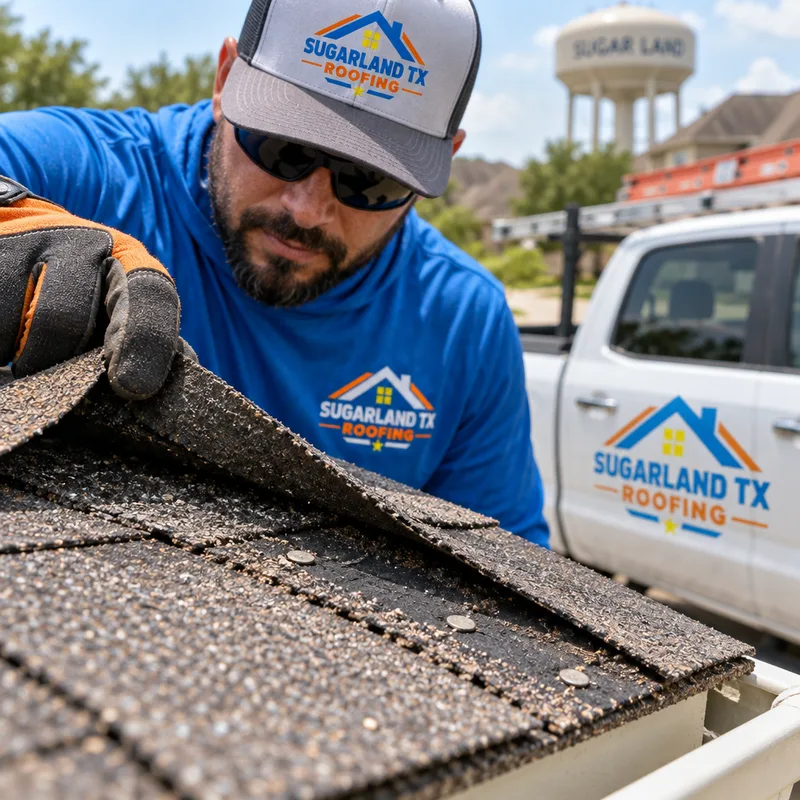
They usually start with the highest-probability leak points: flashing at walls and chimneys, plumbing vents, attic vents, valleys, and any recent penetrations. They may also look for shingle damage patterns that suggest wind lift, nail pops, or debris impact.
Sometimes, but it depends on the failure. Minor sealing might help in very specific situations, but many leaks come from an underlying detail like flashing, underlayment laps, or a cracked pipe boot where a lasting repair often involves replacing a component, not just adding sealant.
If the attic is accessible and safe to enter, it can help confirm where moisture is showing up and whether the decking is damp. Attic checks can also reveal condensation issues or duct problems that can be mistaken for a roof leak.
Ask what they believe the leak source is, what materials they plan to replace—shingles, flashing, boots, or underlayment—and what adjacent areas they will inspect for related wear. It's also reasonable to ask how they'll protect landscaping and how they'll handle debris during the repair.
One call starts the conversation
Call Sugar Land TX Roofing, explain what's happening once, and get connected with a local contractor for roof repair in Sugar Land, TX. You'll speak with the contractor directly, hear what they find, and decide what to do next.
CALL NOW: (346) 375-7532Service Area
Our referral network covers Sugar Land and nearby communities within roughly 10 miles — see the map below.